
Bergbahnen See


From See up to Medrig Alm
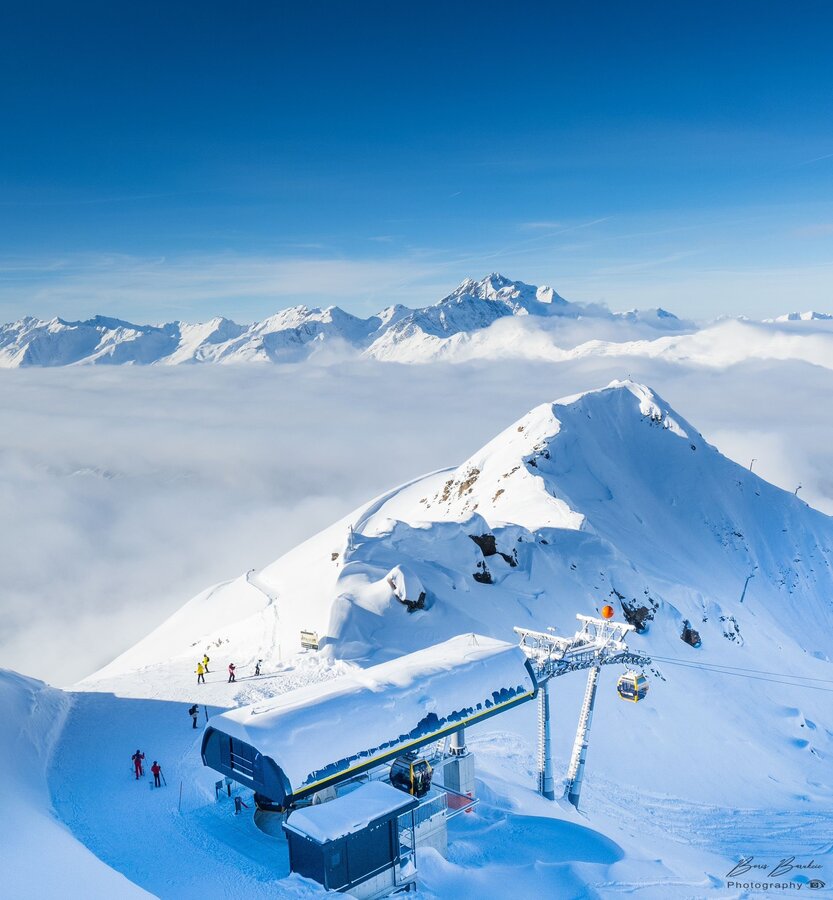
Bergbahnen See takes guests directly from the village centre into the mountains around Medrig Alm. In winter, its lifts provide access to the See ski area with 42.5 kilometres of slopes at elevations of up to 2,500 metres.
The Kappl & See ski area adds a second independent ski area to the mix. With a single ski pass, guests can enjoy a total of 88 kilometres of slopes and 20 lifts and cable cars. Wide runs, sunny slopes, family activities and freeride opportunities make for a varied winter experience across both ski areas. What’s more, the regional ski bus makes it easy to switch between them.
In summer, the open cable cars take guests up to a variety of circular hiking trails and bike routes around Medrig Alm. Medrig Carts, Seebi’s Bear World and Medrig Wellness Park add active, family-friendly and relaxing experiences to a day in the mountains.
Everything you need for the journey up
-
Winter operations: ski pass prices and operating times for the See ski area and the Kappl & See ski area
-
Summer operations: summer cable car service, tickets and suitable destinations for active days
-
Live status: up-to-date information on open lifts and slopes
-
Ticket shop: buy tickets and ski passes online in advance


Bergbahnen See at a glance
A successful day in the mountains begins long before the first gondola ride. At Bergbahnen See Ges.m.b.H., many different tasks come together to ensure that lifts, slopes and leisure facilities are ready and running reliably. The team looks after daily operations and all the work required for winter days in the ski area as well as summer outings to Medrig Alm. Anyone interested in joining the team can find current vacancies on the Kappl & See jobs page.


Onwards and upwards since 1972
The history of Bergbahnen See began in 1972 with the development of the ski area on Medrig Alm. At the time, a single-seater chairlift ran directly up from the village centre, complemented by the Rauhkopflift and the Medrig Alm mountain restaurant. Step by step, this developed into the infrastructure available to winter and summer guests today. More recent milestones include the Versingbahn cable car, the Furglerblick gondola and the opening of the Kappl & See ski area in the 2023/24 winter season.
History of Bergbahnen See
The Medrigjoch single-seater chairlift and Rauhkopflift began operating in 1972/73. The Medrig Alm mountain restaurant opened at the same time. This laid the foundations for the further development of the See ski area.
- 1972–1973: Commissioning of the Medrigjoch cableways, comprising a single-seater chairlift (ESL-Medrigjoch) and a T-bar lift (Rauhkopflift), as well as the opening of the Medrig Alm mountain restaurant
- 1976: Construction of the Almlift
- 1978: Construction of the Panoramalift
- 1983: Construction of the ESL-Zeinis
- 1990: Completion of the 6-EUB-Medrigjoch, construction of the 4-SB-Rossmoos and expansion of the restaurant to 250 seats
- 1991: Expansion of the snow-making system and construction of the toboggan run
- 1993–1994: Construction of the restaurant at the Gratli, extension of a sports shop in the heart of the ski area, expansion of the snow-making system and commissioning of the toboggan run lighting
- 1997: New snowboard fun park
Between 2001 and 2010, the practice area, several runs, the snowmaking system and the infrastructure in the ski area were continuously expanded. In 2009, a system went into operation that still combines snowmaking and hydroelectric power generation today.
- 2001: Construction of the new Zeinis run, the practice area above the Medrig Alm panorama restaurant, and a new health and wellness park behind the panorama restaurant
- 2002: Replacement of the Zeinis single-seater chairlift with a six-seater chairlift; construction of a platter lift, rope tow and conveyor belt at the practice area; expansion of the snow-making system; and new lighting for the night-time skiing route on the new Zeinis run
- 2003: Construction of the children’s ski nursery, electrification and refurbishment of the Medrig Alm T-bar lift
- 2005: Construction of the Versing run, planning and start of construction of the Versing I and Versing II cableways, as well as the establishment of explosives and detonators storage facilities
- 2006: Completion of the Versing run and the explosives and detonators storage facilities, as well as the expansion of the snow-making system
- 2007: Expansion of the snow-making system and construction of a bar with a canopy at the Gratli
- 2008: Start of the realignment of the valley run and construction of a car park with approximately 350 spaces directly next to the valley station of the gondola lift, as well as construction of the Medrig Alm ice bar
- 2009: Snow-making and power generation facilities: Construction of three new machine houses (one pumping station, two hydroelectric power stations); completion of the pipework and snowmaking system for the valley run, as well as the re-grading of the valley run, plus the purchase of a further conveyor belt for the practice slope
- 2010: Expansion of the snowmaking system, refurbishment of the free-flow area at the Medrig Alm panorama restaurant, various piste construction works (improvements to the ridge run and the “Adrenalin” piste), construction of the new Gratli ski bridge, completion of the energy generation plant, installation of a new piste guidance system and launch of a local information channel
With the Versingbahn in 2014 and the gondola lift Furglerblick in 2022, two modern facilities were added.& nbsp;Since the 2023/24 winter season, See and Kappl have formed the Kappl & See ski area. In 2025, the Familienglückbahn, a new family-friendly section of piste and the Family Snowpark expanded the range of facilities for families and beginners.
- 2011 to the present: ongoing expansion of the ski resort
- 2011: construction of a children’s play area at the top station of the gondola lift | expansion of the snowmaking system
- 2012: expansion of the snowmaking system (full snow coverage has been possible since the 2012/2013 winter), extension of the panoramic restaurant and construction of a new diesel filling station for the snow groomers
- 2013: Expansion of the snow-making system, refurbishment of the wash-down area, planning of the Versingbahn
- 2014: Construction of the 8-seater Versing cable car, the snow-making system for the intermediate pumping station, the drainage system and the 25 kV power network, as well as piste construction work (avalanche diversion dam) and the construction of the SkyBar
- 2015: Expansion of the snow-making system (19 tower cannons)
- 2016: Construction of a new workshop hall and office spaces; automation of the snow-making system (5 snow cannons); and erection of a blasting mast
- 2017: Expansion of the snow-making system, improvements to the toboggan run, opening of a new ice bar at the Medrig Alm panorama restaurant, and refurbishment of the ski storage room
- 2018: Fitting the 6-seater Medrigjoch chairlift with new electrical systems and expansion of the snowmaking system (valley run), optimisation of the toboggan run (path widening and boarding), slope improvements (valley run, Versing run)
- 2019: Improvements to the former run 2b, further boarding along the toboggan run
- 2020: Slope adaptation of the current run no. 32 (snowmaking, new slope guidance system including Panorama), repairs to the terrace at the Gratli restaurant
- 2021: New 48-metre-long conveyor belt as an access aid to the practice area, slope adaptation of the Grat run
- 2022: Construction of the 8-seater Furglerblick chairlift, slope development (avalanche diversion dam and a 1.2 km-long blue run) and commissioning of a new snow-making system
Hydropower and snowmaking
Since 2009, Bergbahnen See has operated a combined system with two functions: When water is not required for snowmaking, it is used to generate electricity from hydropower. The facilities produce around 11 gigawatt hours of electricity each year. This is a good example of how existing infrastructure can be used for energy generation beyond winter operations.


Questions?
Terms and conditions of Bergbahnen See
Partners of Bergbahnen See
Long-term partners and collaborations support Bergbahnen See in developing a range of offers and activities. Working with companies and organisations from the region and beyond complements the mountain experience and helps bring shared ideas for guests to life.
 |
 |
 |
 |
 |
 |
 |
 |
 |
 |
 |
|
Frequently asked questions about Bergbahnen See
The facilities include three gondola lifts, two chairlifts, two drag lifts, one button lift and three conveyor lifts. The live status shows which lifts are currently operating.
Yes. In summer, selected lifts also take guests to hiking paths, bike routes and family attractions on Medrig Alm. The current summer operating times provide information on operating days and opening times.
The full terms and conditions are linked directly in the “Terms and conditions of Bergbahnen See” section. They include the applicable provisions on discounts, ski passes, refunds, loss, transport and service.
The history of Bergbahnen See began in 1972 with the development of the ski area on Medrig Alm. The first lifts began operating in 1972/73. Since then, lifts, slopes and leisure activities have been continuously expanded.
Current accolades include the 2026 Skiresort test win, the Premium Ski Resort award, top marks for snow reliability and piste preparation, and recognition as a Tyrolean family ski region.